

CRN leaders last week helped shape discussions on FDA modernization, regulatory uncertainty, and the evolving compliance landscape
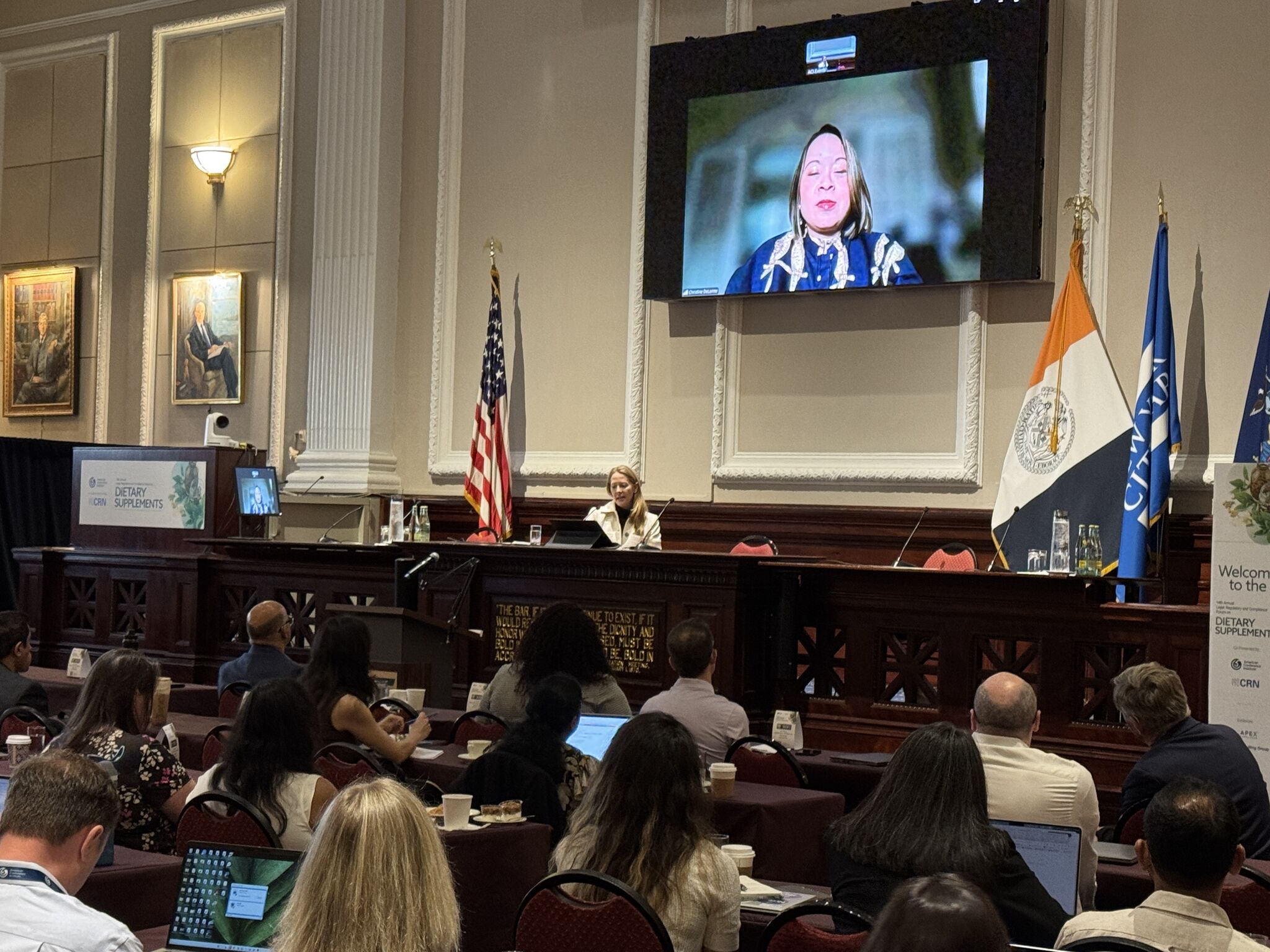
Washington, D.C. — As dietary supplement companies face an increasingly complex and rapidly evolving regulatory environment, a group of leading legal, regulatory, and compliance professionals gathered last week for the American Conference Institute's (ACI) and the Council for Responsible Nutrition’s (CRN) 14th Annual Legal, Regulatory & Compliance Forum on Dietary Supplements. CRN, the leading trade association for the dietary supplement and functional food industries, played a central role throughout the conference, with CRN experts leading discussions on FDA modernization, interviewing senior FDA and FTC officials, and providing insight into the legal, regulatory, and policy issues shaping the future of the industry.
Serving as conference co-chair, CRN Senior Vice President & General Counsel Megan Olsen opened the event by framing the challenges facing the industry, noting the accelerating pace of federal and state regulatory activity and the growing importance of collaboration among legal, regulatory, and compliance professionals. The event was also co-chaired by Carlos Lopez, senior vice president and general counsel for CRN member Niagen Bioscience.
One of the conference's signature sessions featured a keynote conversation between CRN Senior Vice President & Chief Science Officer Andrea Wong, Ph.D., and Cara Welch, Ph.D., director of FDA's Office of Dietary Supplement Programs. The discussion offered attendees valuable perspectives on FDA's current priorities, ongoing efforts to modernize dietary supplement oversight, and the scientific and regulatory issues expected to influence the agency's work in the years ahead.
FDA modernization remained a central theme throughout the conference.
Across multiple sessions, speakers examined the implications of evolving FDA policies related to new dietary ingredient notifications (NDINs), drug preclusion, Generally Recognized as Safe (GRAS), enforcement priorities, and broader efforts to modernize dietary supplement oversight. Rather than viewing these developments as isolated policy changes, panelists emphasized that companies should prepare for an environment in which regulatory expectations continue to evolve, requiring more agile governance, stronger cross-functional collaboration, and proactive compliance planning.
Regulatory uncertainty extended well beyond FDA
Conference discussions explored the increasingly active role of states in regulating dietary supplements, creating a growing patchwork of requirements that companies must navigate while maintaining national compliance programs. CRN also provided attendees with an update on its constitutional challenge to New York's law restricting the sale of certain dietary supplements to minors, highlighting the potential implications for commercial speech and future state regulation. Class action litigation trends and their potential impact on the dietary supplement industry were also discussed.
Emerging technologies also took center stage as speakers examined how artificial intelligence is changing regulatory compliance, scientific substantiation, post-market surveillance, and risk monitoring. Rather than simply improving efficiency, presenters described how AI is enabling companies to identify emerging issues more quickly and strengthen regulatory decision-making in an increasingly complex marketplace.
In an interview with CRN’s Megan Olsen, attendees also heard directly from FTC’s Christine DeLorme about advertising compliance and consumer protection priorities, with discussions reinforcing the importance of robust substantiation, responsible use of testimonials and reviews, and maintaining consumer trust in an evolving digital marketplace.
"The conversations throughout this conference made clear that regulatory engagement and collaboration across the industry have never been more important," said Olsen. "As the regulatory landscape continues to evolve, opportunities to engage directly with FDA and FTC leaders, hear diverse expert perspectives, and exchange practical experiences help companies make informed decisions while continuing to deliver safe, innovative products that consumers can trust."
The annual forum once again demonstrated why it remains the dietary supplement industry's premier gathering for legal, regulatory, and compliance professionals seeking timely insight into the issues that will shape the industry's future.
###
About CRN: The Council for Responsible Nutrition (CRN), founded in 1973 and based in Washington, D.C., is the leading trade association representing the dietary supplement and functional food industry. Bringing together manufacturers, ingredient suppliers, and service providers, CRN unites its member companies around a shared commitment to science, transparency, and responsible business practices—advancing a strong, credible marketplace that supports consumer health and industry growth.
In an increasingly complex regulatory and media environment, CRN serves as the industry’s front line—shaping science-based policy, defending market access, and countering misinformation. Through strategic advocacy, self-regulatory leadership, voluntary guidelines, and evidence-based communications, CRN ensures that responsible companies are recognized, protected, and positioned to innovate and compete. Learn more at crnusa.org and follow @CRN_Supplements on X and LinkedIn.