

STABILIZING A FRAGMENTED BUSINESS ENVIRONMENT
TARIFFS & TRADE: NAVIGATING UNCERTAINTY
With tariff rates shifting throughout 2025, CRN provided members with regular updates and insights along with strong advocacy. CRN:
- Engaged the office of the U.S. Trade Representative (USTR) and White House National Economic Council on exemptions for ingredients that cannot be produced domestically at scale.
- Retained a consultant as a no-cost to members resource on tariff questions—Brooke Ringel, of Kelley Drye & Warren.
- Presented webinar on Section 232/301 actions, CBP enforcement, and de minimis reforms.
- Partnered with IADSA on global supplement policy alignment with USDA.
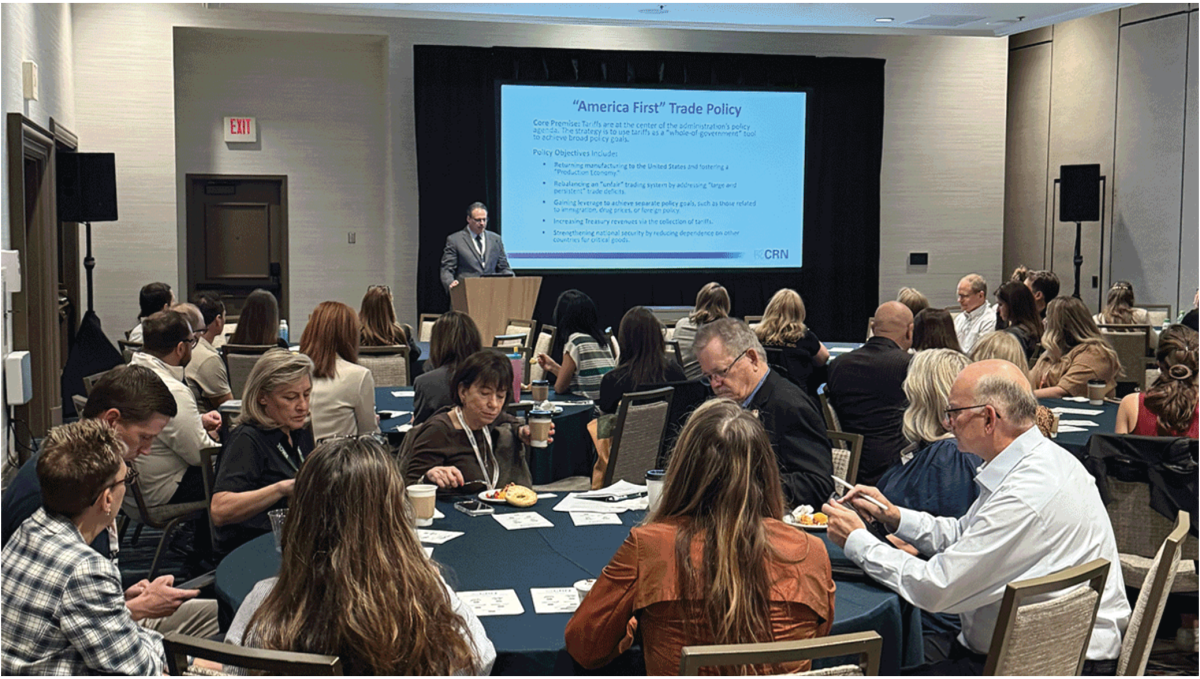
Luke Huber, N.D., provides an update on tariffs during the CRN Member Breakfast Briefing at SupplySide Global.
TURNING THREAT INTO EDUCATION: CALIFORNIA’S HEAVY METAL TESTING LAW
When California mandated public posting of raw heavy metal test results for prenatal vitamins (SB 646), CRN faced a choice: fight the law entirely and likely lose, shutting down any chance at educating legislators, or shape it into something workable. We chose pragmatism—and nuance.
The Threat: Raw test results without scientific context could unnecessarily scare consumers away from important health products. Detectable levels of lead, cadmium, or arsenic would appear alarming—even though heavy metals are ubiquitous in food and the environment, and trace amounts are not dangerous. Worse, companies might strip essential nutrients like iron or calcium from products to make test results look “cleaner,” undermining the very purpose of prenatal supplementation.
CRN’s Negotiated Solution:
- Removed the QR code label requirement, keeping information online only.
- Changed monthly testing to lot testing, aligning with existing Good Manufacturing Practices (GMPs).
- Most importantly: Required mandatory educational language on testing websites explaining the unavoidable presence of minute heavy metal levels and providing scientific context.
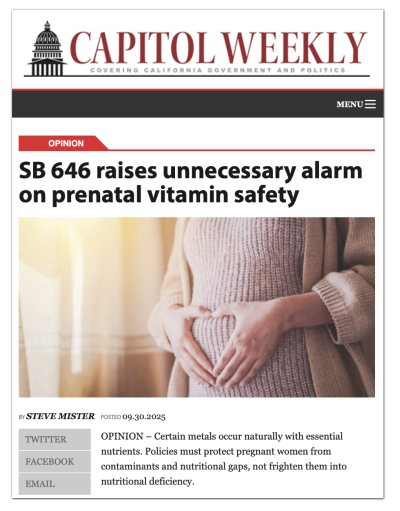 As CRN warned in a Capitol Weekly op-ed, the law could have unintentionally discouraged women from taking prenatal supplements during the most critical developmental window. CRN’s compromise protects both consumer understanding and nutrient adequacy—imperfect, but workable, and better than the alternative.
COMBATING MISINFORMATION WITH SCIENCE
Throughout 2025, CRN pushed back against alarmist allegations about “detectable” levels of contaminants in supplements such as prenatals and protein powders—from California’s SB 646, to the Clean Label Project’s lack of transparency, to Consumer Reports’ protein powder testing. CRN’s message was consistent:
- Heavy metals are ubiquitous in food and the environment.
- Trace, detectable levels are not dangerous—context matters.
- Supplement manufacturers are required under FDA GMPs to test for contaminants and ensure compliance with federal standards.
- Public health is harmed when women are scared away from beneficial prenatal supplements.
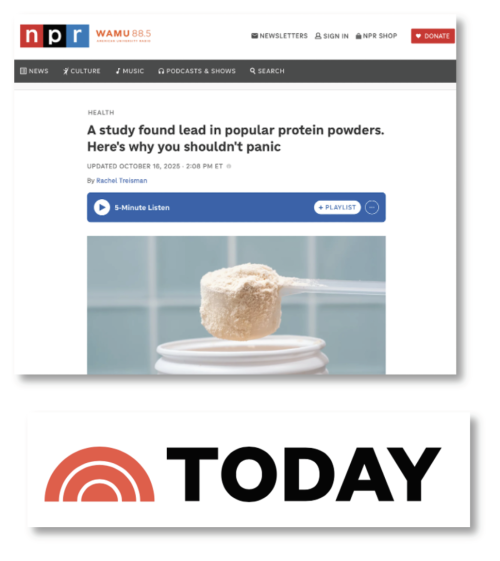 CRN’s media response—cited in CNN, Today, NPR, and syndicated coverage—provided the scientific counterweight to sensationalism, protecting not only protein, but the prenatal gateway that so often leads consumers to trust supplements to support their health.
THE BUSINESS CASE FOR GOOD CORPORATE CITIZENSHIP
