

MARCH 2026
Questions about these unlocked supplement industry updates or other CRN Supplement headlines? Connect with Ed Wyszumiala (ewyszumiala@crnusa.org) 989-598-5275 or via LinkedIn for a complimentary consultation. Learn more about CRN membership here.
RMAA introduced to create national standard for recycled content claims

The Recycled Materials Attribution Act (RMAA) has been introduced in Congress, renewing efforts to establish a consistent, national framework for recycled content claims. The legislation is intended to provide greater clarity for manufacturers and consumers by setting uniform standards for how recycled materials are substantiated and marketed.
- CRN is actively engaged in this space as the only dietary supplement trade association participating in the Recycling Leadership Council (RLC), which is endorsing the RMAA. The RLC is a cross-industry coalition working to advance clear, consistent national recycling definitions and standards.
What’s proposed: The RMAA would prohibit misleading recycled content claims, recognize “mass balance accounting” as an acceptable method for substantiating certain recycled content claims, and direct updates to the Federal Trade Commission’s Green Guides to reflect modern recycling technologies and practices.
Yes, and: The bill defines key recycling-related terms and is intended to create a uniform national standard that could limit conflicting state recycled content standards, with the goal of reducing compliance complexity across jurisdictions.
Why it matters: As expectations around environmental marketing continue to evolve, a harmonized federal approach could help streamline compliance while reinforcing transparency and consumer confidence in sustainability claims. CRN will continue monitoring developments and keep members informed of any implications for the dietary supplement industry.
CRN opens call for proposals for 2026 ‘Innovation Exchange’ ...learn more

CRN calls for drug preclusion reform to end regulatory uncertainty
Regulatory uncertainty has become one of the most significant barriers to innovation in the dietary supplement industry. In a recent byline in SupplySide Supplement Journal, CRN President & CEO Steve Mister argued that modernizing the “drug preclusion” provision of the Food, Drug and Cosmetic Act is essential to restoring predictability, transparency, and balance to the marketplace.
Mister explained that a clause originally intended as a narrow protection for pharmaceutical research has instead evolved into a source of instability, allowing confidential drug filings and shifting interpretations to disrupt lawfully marketed supplement ingredients. The result, he wrote, has been commercial risk, consumer confusion, and prolonged regulatory limbo.
What we're saying: “This is modernization, not deregulation,” Mister wrote, emphasizing that the goal was to preserve incentives for drug development while ensuring transparency, fairness, and predictability for responsible supplement companies.
Why it matters: A predictable, science-based regulatory framework that is clear before products reach the market is critical to fostering innovation, supporting compliance, and maintaining consumer trust.
Go deeper: Read Mister’s full article to learn more about the proposed reforms and what they could mean for the future of the industry.
CRN attends National Conference on Women’s Health
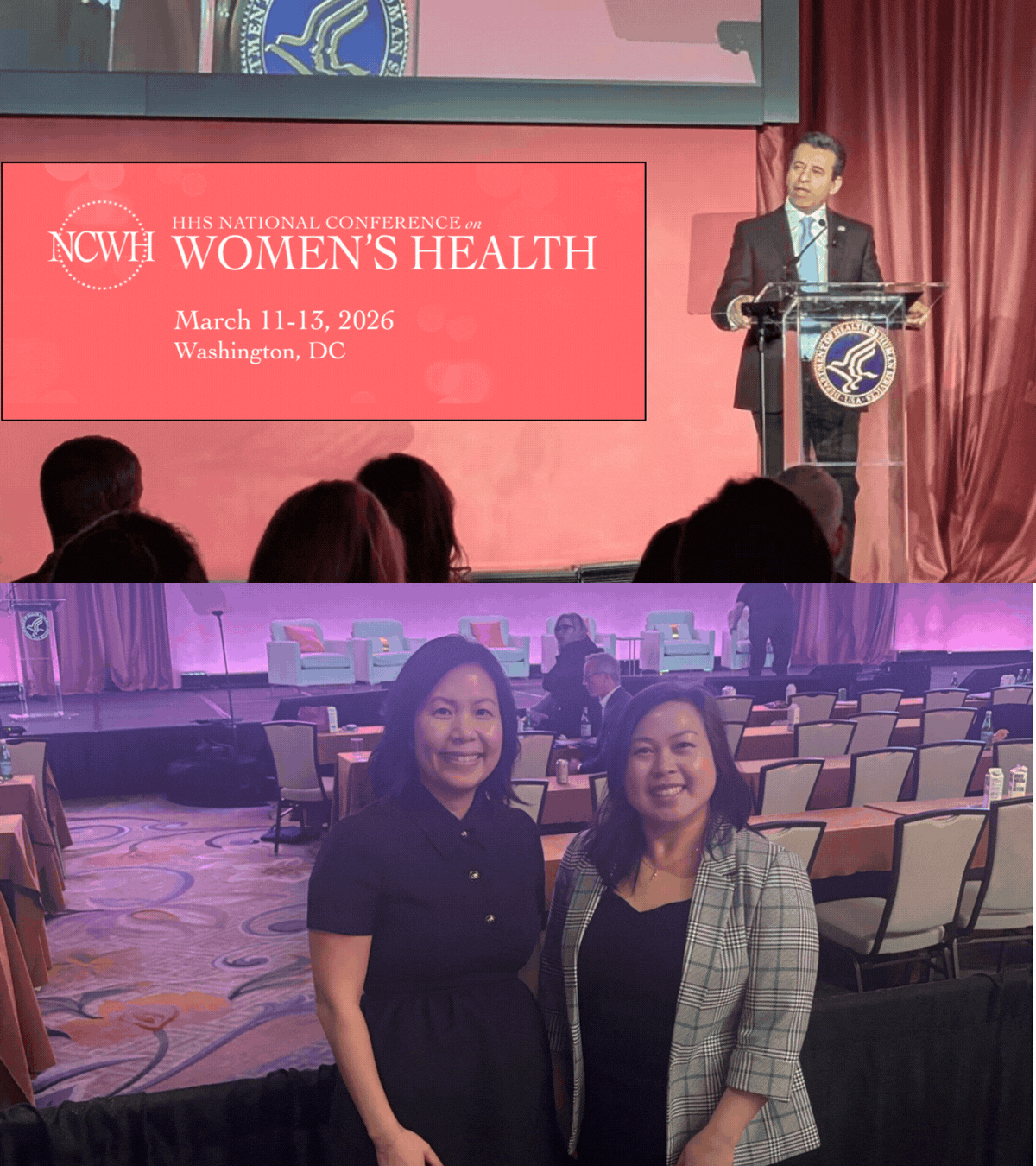
CRN was invited to attend the 2026 National Conference on Women’s Health, held March 11–13 in Washington, D.C., convening leaders from government, academia, healthcare, and industry to discuss emerging issues shaping women’s health.
Hosted by the U.S. Department of Health and Human Services’ Office on Women’s Health, the conference explored a range of topics including innovation in women’s health research, chronic disease prevention and treatment, reproductive health, and the role of new technologies in advancing care. It included panels featuring FDA Commissioner Marty Makary, M.D., and NIH Director Jay Bhattacharya, M.D., Ph.D.
What they're saying: In discussing transformative women’s health research that is taking place at NIH, Dr. Bhattacharya emphasized that women’s health includes the entire lifespan, not only at menopause or at the onset of disease. “It starts at birth.”
CRN’s participation provided an opportunity to stay informed on broader women’s health priorities and engage with stakeholders working across the healthcare ecosystem.
Go deeper: Learn more about the conference agenda and sessions on the event website.
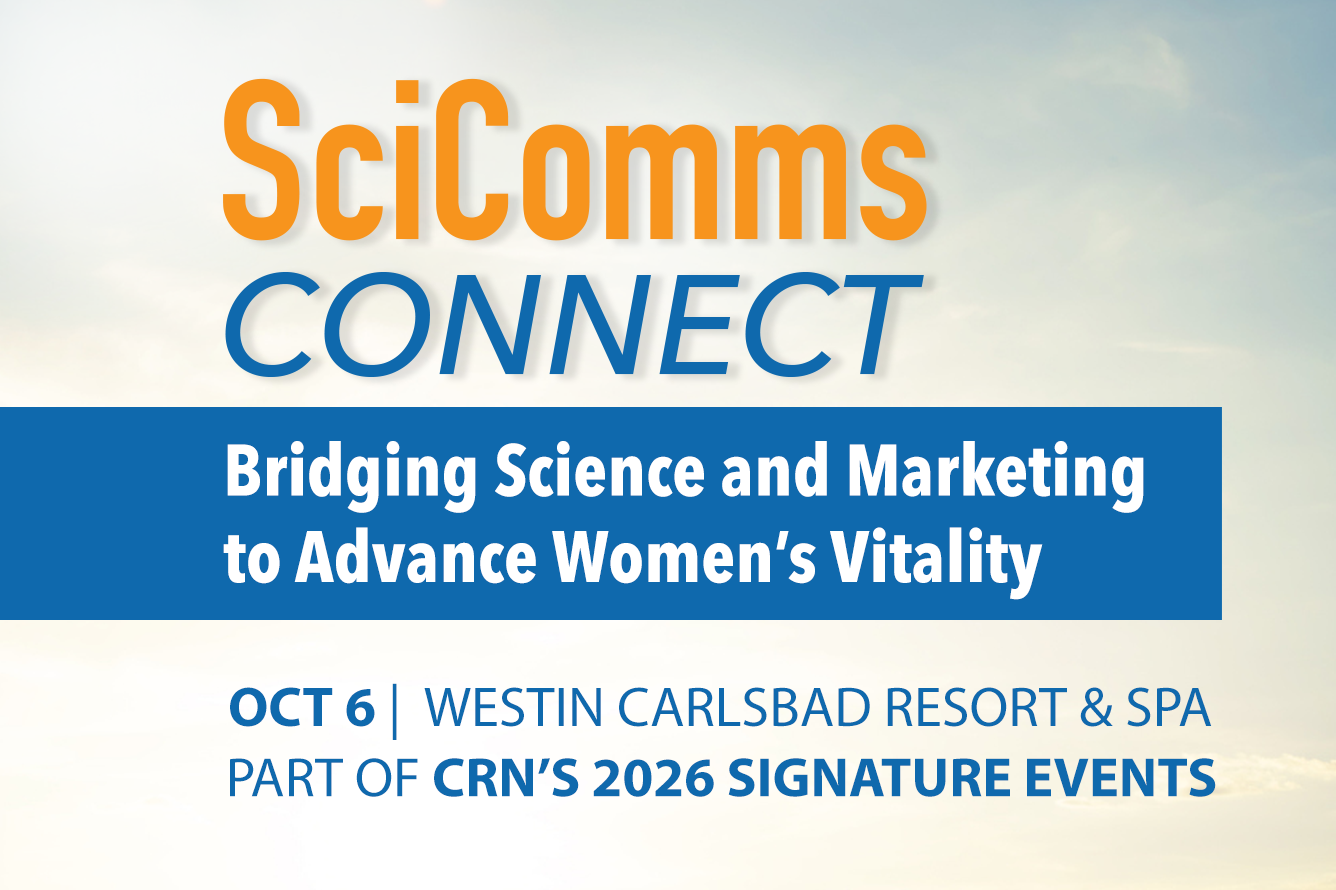
CRN announces new ‘SciComms Connect’ symposium ...learn more
Why CRN is addressing extreme “supplement stacking” — without losing sight of responsible use
CRN responded via a LinkedIn post to a recent Wall Street Journal article on “supplement stacking,” pushing back on how the trend is being portrayed. While extreme use exists, CRN argues it’s being treated as the norm when it’s anything but. The kinds of regimens highlighted—people taking dozens or even more than 100 supplements a day—are outliers, not reflective of how most Americans actually use these products.
Why it matters: The framing risks distorting public perception—turning fringe behavior into a proxy for the entire supplement category.
CRN doesn’t dismiss the concern outright. In fact, it agrees that influencer-driven trends encouraging excessive or indiscriminate use can be risky, especially when consumers aren’t consulting healthcare professionals. But the group draws a clear distinction between those behaviors and evidence-based supplementation, which remains widely recommended for specific needs like prenatal health, aging, or nutrient deficiencies.
Yes, but: Bad practices online shouldn’t be conflated with responsible, science-backed use.
A central issue is context. The article’s suggestion that supplements are “unapproved” glosses over the fact that they are regulated under federal law, with requirements around safety, labeling, and manufacturing standards—and with FDA oversight to act when products are unsafe or misleading. At the same time, CRN acknowledges that not all supplements are backed by the same level of evidence, though many commonly used nutrients—like vitamin D, omega-3s, and folic acid—have strong scientific support and are embedded in public health guidance.
The nuance: Evidence varies, but many mainstream supplements are well-studied and widely recommended.
The response also calls out a key source of confusion: products like injectable NAD+ or glutathione, which are often lumped into the conversation but don’t actually qualify as dietary supplements under federal law. Including them in the same category, CRN argues, muddies the regulatory and safety picture.
Reality check: Not everything labeled a “supplement” in headlines actually is one.
Ultimately, CRN lands in a middle ground. Consumers should be wary of copying extreme routines they see online and should think carefully about dosage, interactions, and product quality. But those concerns shouldn’t overshadow the reality that, for most people, supplements are used responsibly—and can play a meaningful role in supporting health when paired with a balanced diet and lifestyle.
Bottom line: Be smart—not cynical—about supplements.
New resource: BBB launches Institute for Responsible Influence
BBB National Programs recently launched the Institute for Responsible Influence (IRI), a new initiative from its Center for Industry Self-Regulation focused on promoting transparency and responsible practices in influencer marketing.
- The initiative is designed to help brands, agencies, and creators promote responsible content practices and clearer disclosure of brand partnerships in digital marketing.
As part of the effort, IRI is developing a creator certification program that will provide training on advertising standards, Federal Trade Commission endorsement guidance, and responsible promotion practices. Creators who complete the program will be able to signal their commitment to transparent and ethical marketing, and brands will be able to identify certified creators through a searchable database.
Enrollment for the certification program is expected to open in spring 2026.
For companies that work with influencers, the new resource may serve as a useful tool for supporting responsible marketing practices and clear disclosure in creator partnerships.
Upcoming webinars


Now available on demand