


Q2 PERSPECTIVE: Growth in the dietary supplement marketplace depends on more than consumer demand. It requires that responsible companies can compete, innovate, and build trust in a credible business environment.
- Uneven regulatory enforcement, media misinformation, fragmented industry positions, and suboptimal marketplace visibility can impact costs, weaken consumer confidence, and limit growth.
- CRN is strengthening the conditions for growth—building industry influence, advancing practical oversight, protecting category credibility, and deepening engagement with policymakers and healthcare professionals.
1. A Unified Industry Voice Strengthens the Business Environment

Scenes from CRN's Day on the Hill member fly-in. Executives from CRN member companies including Amway, Nestlé Health Science, Pharmavite, Unilever, and many more participated in congressional meetings advocating for science-based policy for the responsible supplement industry with one voice.
What’s happening:
Dietary supplement policy is being shaped amid competing priorities and differing views about how the industry should be regulated. During CRN’s "Day on the Hill," member company representatives met with more than 60 congressional offices to communicate shared priorities and explain how federal policy decisions affect businesses, consumers, and public health.
Why it matters:
Policy decisions can directly influence market access, operating costs, product investment, consumer access, and the industry’s capacity for long-term growth. Individual companies can advocate for their own interests, but a coordinated industry presence gives policymakers a clearer understanding of the category’s economic value and the practical consequences of proposed legislation.
CRN in action:
CRN organized and led congressional meetings addressing HSA and FSA eligibility for dietary supplements, national uniformity of supplement regulation, a mandatory label registry, tariffs, and trade and supply-chain concerns. CRN equipped members with consistent messages and policy materials while creating opportunities for executives to explain how legislative decisions affect investment, employment, innovation, and consumer demand.
EXECUTIVE INSIGHT: A strong collective voice helps create the policy conditions responsible companies need to invest, compete, and grow.
2. Market Visibility Protects the Value of Compliance
What’s happening:
FDA lacks a comprehensive way to identify dietary supplement products currently on the U.S. market. That gap makes it harder to distinguish legitimate products from unlawful or noncompliant ones. The agency has called for a mandatory supplement registry for several years.
Why it matters:
Responsible companies absorb the cost of quality systems, testing, substantiation, labeling compliance, and post-market oversight. When competitors avoid those obligations, the result is not just a regulatory problem. It affects pricing, retailer confidence, brand differentiation, and the return on responsible investment.
CRN in action:
CRN expanded advocacy for the Dietary Supplement Listing Act and launched the "Sergeant Searchlight" campaign to make a straightforward case to lawmakers and legislative staff: FDA needs better visibility into what is being sold as a supplement. CRN carried that message into its congressional meetings emphasizing responsible industry's support of a listing framework that improves oversight without creating premarket approval.
EXECUTIVE INSIGHT: Better market visibility can strengthen the competitive value of quality and compliance. Industry leaders can help by making the case for a practical listing framework that improves oversight without creating premarket approval.
CRN Speaks
Perspectives on Influence, Trust and Growth
Two Hundred Fifty Years of Life, Liberty, and the Pursuit of Health

CRN President & CEO Steve Mister reflects on how, from colonial-era herbal remedies to today's daily multivitamin, America's 250th birthday traces the impulse driving supplementation that has been part of the nation's story from the very beginning. See Nutritional Outlook article.
Showing Up Still Matters: Reflections from CRN's Day on the Hill
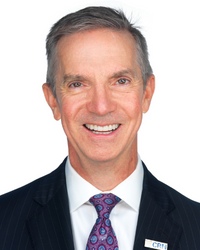
Mister discusses why face-to-face engagement with policymakers remains essential to advancing consumer access, responsible innovation and industry trust—and why collective advocacy gives companies influence they cannot achieve alone. See Nutraceuticals World article.
Why Prenatal Nutrition Took Center Stage at ACOG

CRN Chief Science Officer Andrea Wong, Ph.D., examines the growing demand among healthcare professionals for practical, evidence-based prenatal nutrition guidance—and what the standing-room-only response at the CRN Foundation American College of Obstetricians and Gynecologists (ACOG) Annual Clinical & Scientific Meeting session signals about nutrition’s expanding role in clinical care. See SupplySide Supplement Journal article.
Beyond Self-Regulation: The Unexpected Value of the Supplement OWL
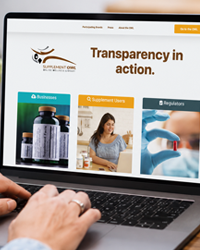
CRN team members share how participation in the OWL supplement listing database delivered immediate business value and can provide benefits in addition to a company's demonstration of transparency and compliance—from faster alerts and coordinated responses to retailer readiness, reputation management and investor or M&A diligence. See Nutrition Industry Executive article.
3. Expanding HSA/FSA Eligibility Could Increase Consumer Purchasing Power for Supplements
What’s happening:
Bipartisan legislation introduced this May would allow consumers to use tax-advantaged healthcare accounts, including HSAs and FSAs, to purchase dietary supplements. Today, most supplements are excluded or require a doctor's note or additional platform filings, even as consumers increasingly invest in nutrition and preventive health.
Why it matters:
Expanding eligibility could reduce out-of-pocket costs, broaden consumer access, and put dietary supplements on more equal footing with other products and services people use to manage their health. For the industry, that could create an additional channel for demand and reinforce supplements’ role in the healthcare economy.
CRN in action:
CRN supported introduction of the Dietary Supplements Access Act and made HSA/FSA eligibility a priority topic during its "Day on the Hill" meetings. CRN is a longtime advocate for modernization of these rules, positioning expanded access as both a consumer-health and economic issue. CRN's 2025 analysis conducted by John Dunham & Associates demonstrated that Americans could gain broad access to supplements through their tax-preferred health accounts with modest impact to the national budget while delivering enormous health benefits for consumers.
EXECUTIVE INSIGHT: Expanding how consumers can pay for supplements could increase access while opening a meaningful new avenue for category expansion.
4. Misinformation Can Undermine Both Brand and Category Growth
What’s happening:
Supplement stories can move quickly from scientific journals or entertainment media into consumer, retailer, and policymaker conversations. In Q2, CRN responded to overstated coverage of a glucosamine study and public claims that conflated illegal “gas station heroin” products with lawful supplements.
In addition, CRN responded to international scrutiny of vitamin B6 that could drive unnecessarily restrictive limits with science-based data from its Vitamin & Mineral Safety reference book chapter on B6.
Why it matters:
A misleading narrative can affect sales, retailer decisions, healthcare-professional recommendations, and confidence in the category. Companies with strong science and compliant products can still absorb commercial damage from claims they did not create.
CRN in action:
CRN supplied members with talking points and a standby statement on the glucosamine study, publicly challenged the "Last Week Tonight with John Oliver" portrayal of illegal products as supplements, and urged regulators to consider the full evidence base on vitamin B6 before imposing limits that could force unnecessary reformulation.
EXECUTIVE INSIGHT: Category reputation is a shared business asset. When the public story is wrong, correcting it quickly matters to every responsible brand.
5. Prenatal Nutrition Engagement Opens a Trusted Market Opportunity
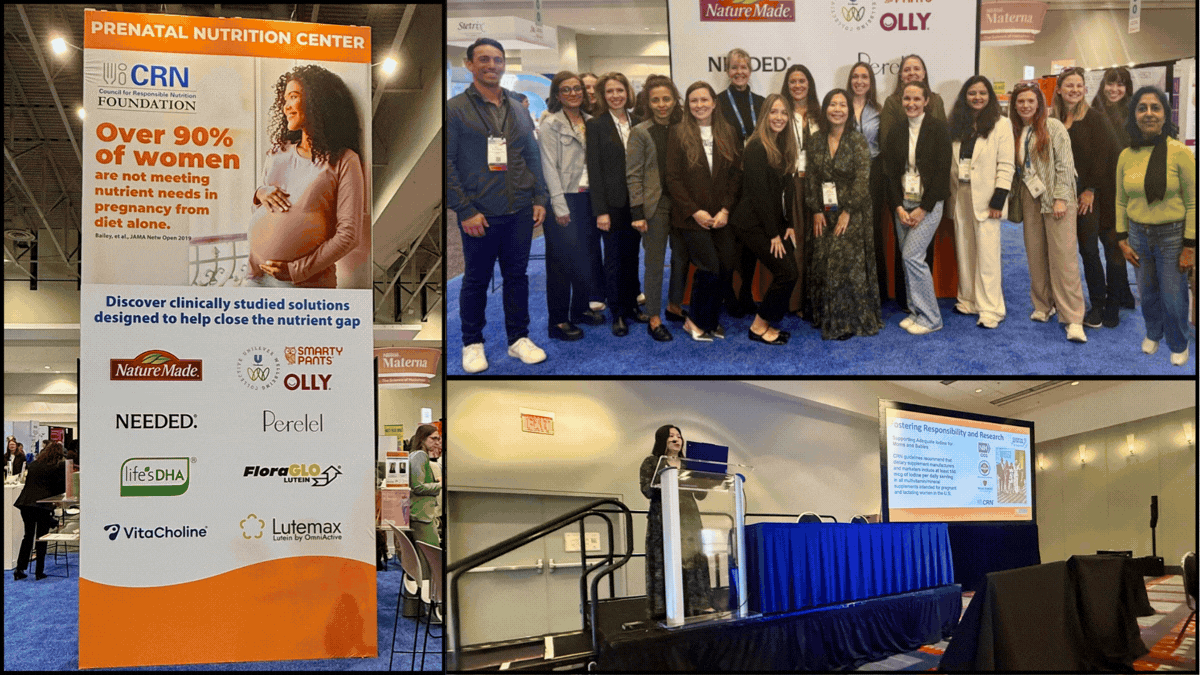
Scenes from the ACOG Annual Clinical & Scientific Meeting, where the CRN Foundation hosted a prenatal nutrition education center as well as a workshop session, "Optimizing Prenatal Nutrition and Supplementation: Evidence-Informed Strategies in Clinical Practice," highlighting nutrient gaps and explaining the role of nutrients in prenatal supplementation.
What’s happening:
Healthcare professionals are showing growing demand for practical nutrition guidance they can use with patients. These stakeholders influence product use, patient confidence, and how supplements are understood within preventive care. Better nutrition education can support more informed recommendations and increase confidence in evidence-based products.
Why it matters:
Prenatal vitamins are often the first supplement a person takes on a doctor’s recommendation. A woman starts prenatal supplementation, has a healthy pregnancy and baby. The woman looks into learning more about how to support her family's wellness. Soon, the whole family is taking multivitamins, and adding specialty products to address personal health needs, for example, omega-3s, probiotics, and vitamin D.
CRN in action:
At the American College of Obstetricians and Gynecologists (ACOG) Annual Clinical & Scientific Meeting the CRN Foundation’s Prenatal Nutrition Center reached a record number of healthcare professionals and its educational session drew a standing-room-only audience. The CRN Foundation brought the Prenatal Nutrition Center and related educational programming to ACOG, giving obstetric healthcare professionals evidence-based resources on nutrient needs before, during, and after pregnancy and practical guidance for patient conversations. Read more in this unlocked CRN Supplement story.
EXECUTIVE INSIGHT: Building credibility with healthcare professionals can expand informed product use, strengthen trust, and support sustainable growth in an important health category.
CRN Member Executive Spotlight
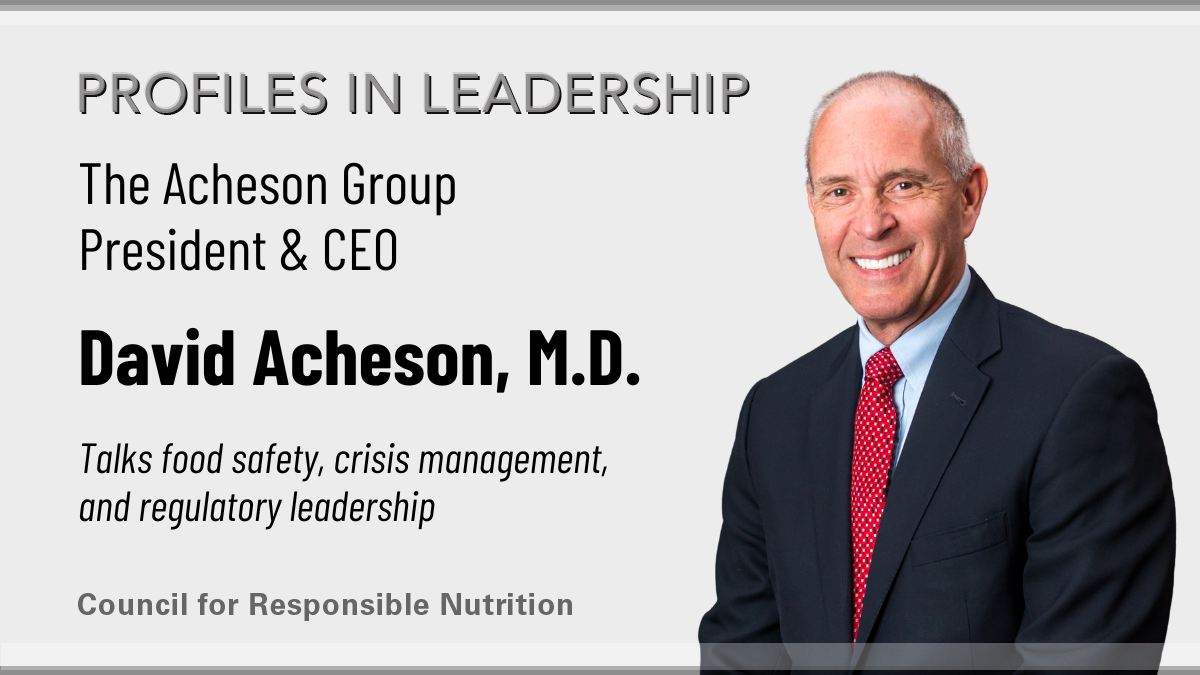
Few leaders in food safety have seen the industry from as many angles as David Acheson, M.D. Over the course of his career, Dr. Acheson served in senior leadership roles at both FDA and USDA, practiced medicine, led scientific research, and built a global consulting firm that helps companies navigate some of the industry's most complex challenges—The Acheson Group (TAG).
Rather than viewing food safety through a single lens, Dr. Acheson focuses on balancing public health, regulatory expectations and business realities. He encourages organizations to think beyond technical compliance and evaluate the broader strategic risks they face, including protecting consumer trust.
"When you're talking to CEOs and boards of directors about where do we need to put our money and true concern, it's the combination of, 'Am I going to kill anybody? Am I going to have FDA crawling all over me? Is my reputation going to tank?'" That holistic approach has become increasingly important as the industry evolves.
Dr. Acheson has watched consumer expectations shift dramatically as his career has unfolded. Foodborne pathogens remain a critical focus, but public conversations now extend to heavy metals, pesticides, food additives and ultra-processed foods. At the same time, social media has fundamentally changed how companies respond to emerging issues.
"If you screw up, your reputational vulnerability is much more fragile than it ever used to be," he said. "Consumers will throw a brand under the bus, not always for the right reasons, but it happens."
One lesson stands above the rest for companies trying to navigate today's rapidly changing environment, Dr. Acheson believes: stay current.
Regulations evolve, consumer perceptions change, new technologies emerge, and artificial intelligence is beginning to reshape how companies identify and manage risk. Organizations that continuously monitor those changes are better positioned to respond before challenges become crises.
Learn more about Dr. Acheson's leadership philosophy and approach to protecting both consumers and businesses in our “Profiles in Leadership” series.
Learn how your company can benefit from being part of the CRN member community.
Questions? Please contact CRN Senior Director of Membership Ed Wyszumiala (ewyszumiala@crnusa.org / 989-598-5275).