


Added content from our periodic snapshot of CRN updates exclusively for C-suite executives.
Contact Gretchen Powers (gpowers@crnusa.org) for more information.
The Business Risk of Misinformation—and the Value of Strategically Delivered Credible Science
As shared in the Q2 2026 CRN C-Suite Snapshot email, misinformation can undermine both brand and category growth, with supplement reporting moving quickly from scientific journals or entertainment media into consumer, retailer, and policymaker conversations. Here we share more about how CRN responded to overstated coverage of a glucosamine study—see below—in addition to pushing back on public claims that conflated illegal “gas station heroin” products with lawful supplements, and international scrutiny of vitamin B6 that could drive unnecessarily restrictive limits—read more on these topics in our Q2 report.
Conversely, consistently disseminating science-based factual information about dietary supplements and their role in supporting human health at every lifestage is critical to elevating the industry's reputation—with a great example seen in CRN's outreach at the American College of Obstetricians and Gynecologists (ACOG) Annual Clinical & Scientific Meeting. Read on for more.

UNLOCKED for the public from the CRN SUPPLEMENT Member Newsletter edition:
FROM OUR MAY 7 EDITION:
Science-based prenatal nutrition resources resonate at ACOG
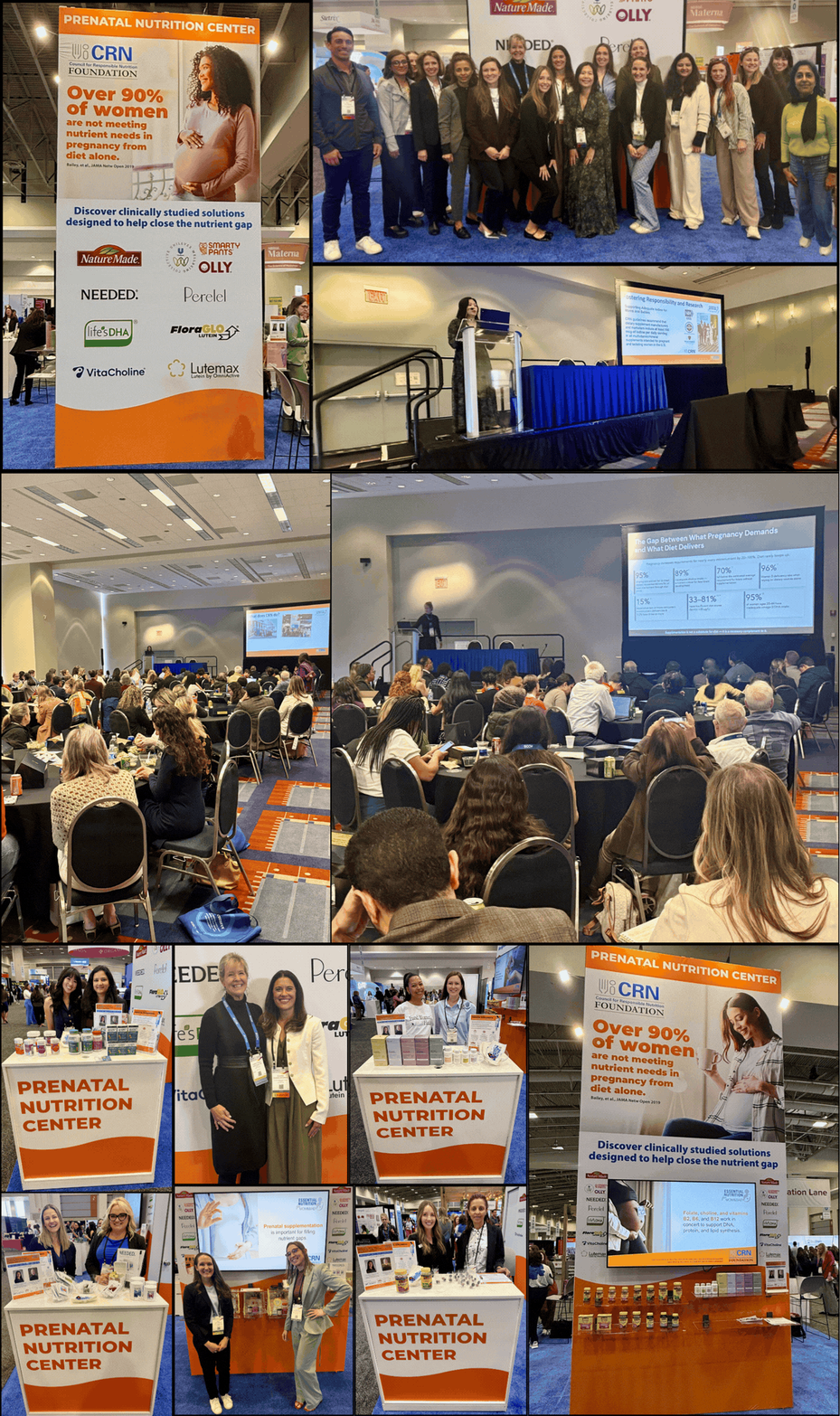
Strong healthcare professional engagement at this year’s American College of Obstetricians and Gynecologists (ACOG) Annual Clinical and Scientific Meeting highlighted growing demand for science-based education on prenatal nutrition and dietary supplements, with the CRN Foundation’s Prenatal Nutrition Center and educational workshop drawing significant engagement from clinicians across maternal healthcare.
Why it matters: In a recent byline for SupplySide Supplement Journal, Andrea Wong, Ph.D., CRN’s SVP and chief science officer, emphasized that many pregnant women are not meeting increased nutrient needs through diet alone, reinforcing the important role evidence-based supplementation can play in supporting maternal and infant health.
Inside the discussion: The CRN Foundation’s workshop on evidence-informed prenatal nutrition drew a standing-room-only audience, with OB/GYNs, midwives, nurse practitioners, and other healthcare professionals seeking practical guidance on nutrients including folic acid, iron, calcium, iodine, choline, DHA omega-3s, vitamin D, lutein and zeaxanthin.
The big picture: Dr. Wong said the strong turnout and clinician engagement underscore increasing recognition of prenatal nutrition as an important component of patient care and highlight the value of continued collaboration between industry and healthcare professionals.
This year’s Prenatal Nutrition Center was made possible with the support of leading organizations including Balchem, dsm-firmenich, Kemin Industries, OmniActive Health Technologies, Pharmavite, Needed, Perelel, and Unilever Wellbeing Collective brands OLLY and SmartyPants.
Join the conversation on LinkedIn.
FROM OUR JUNE 18 EDITION:
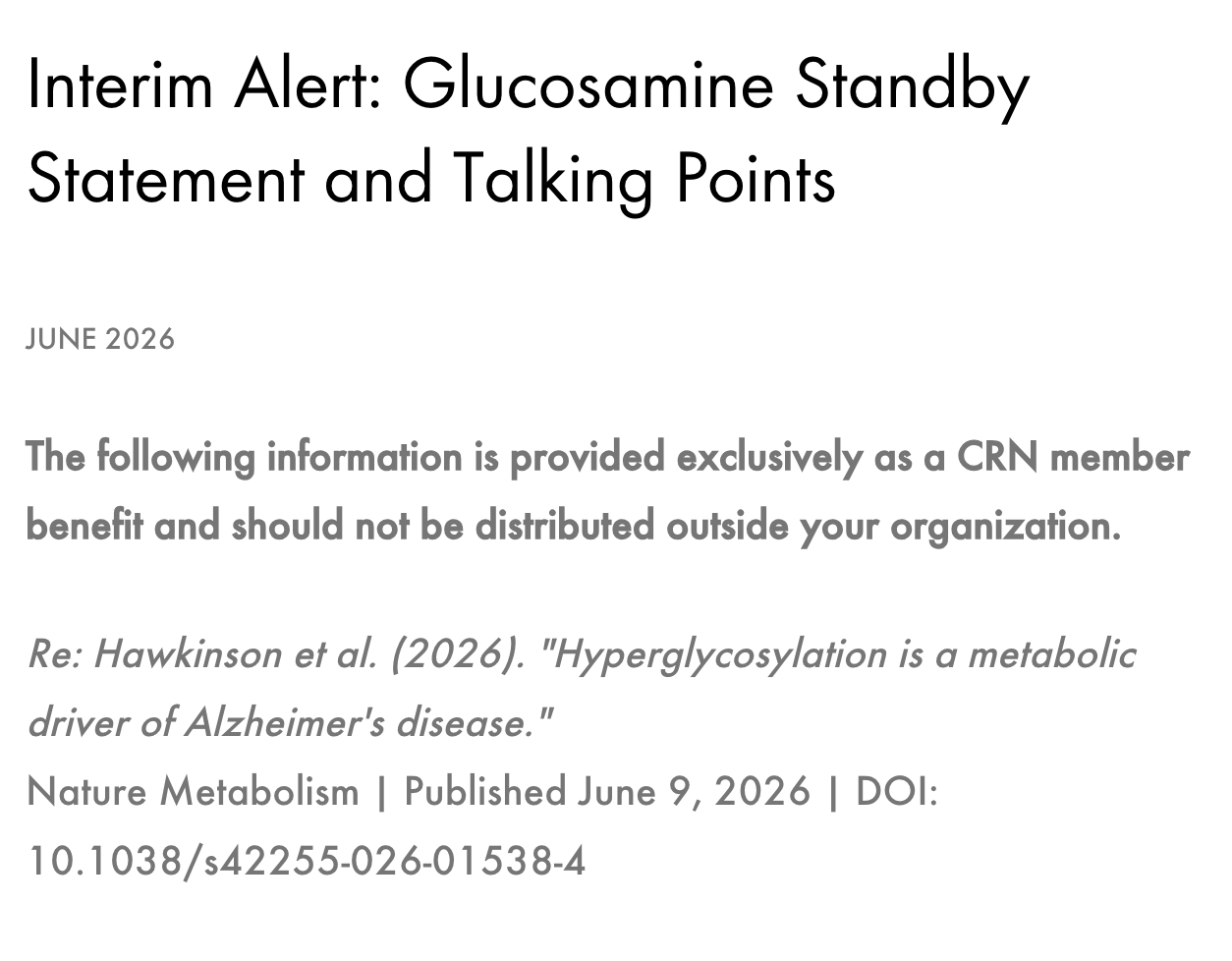
CRN provides member resource on glucosamine and Alzheimer’s study, monitors coverage
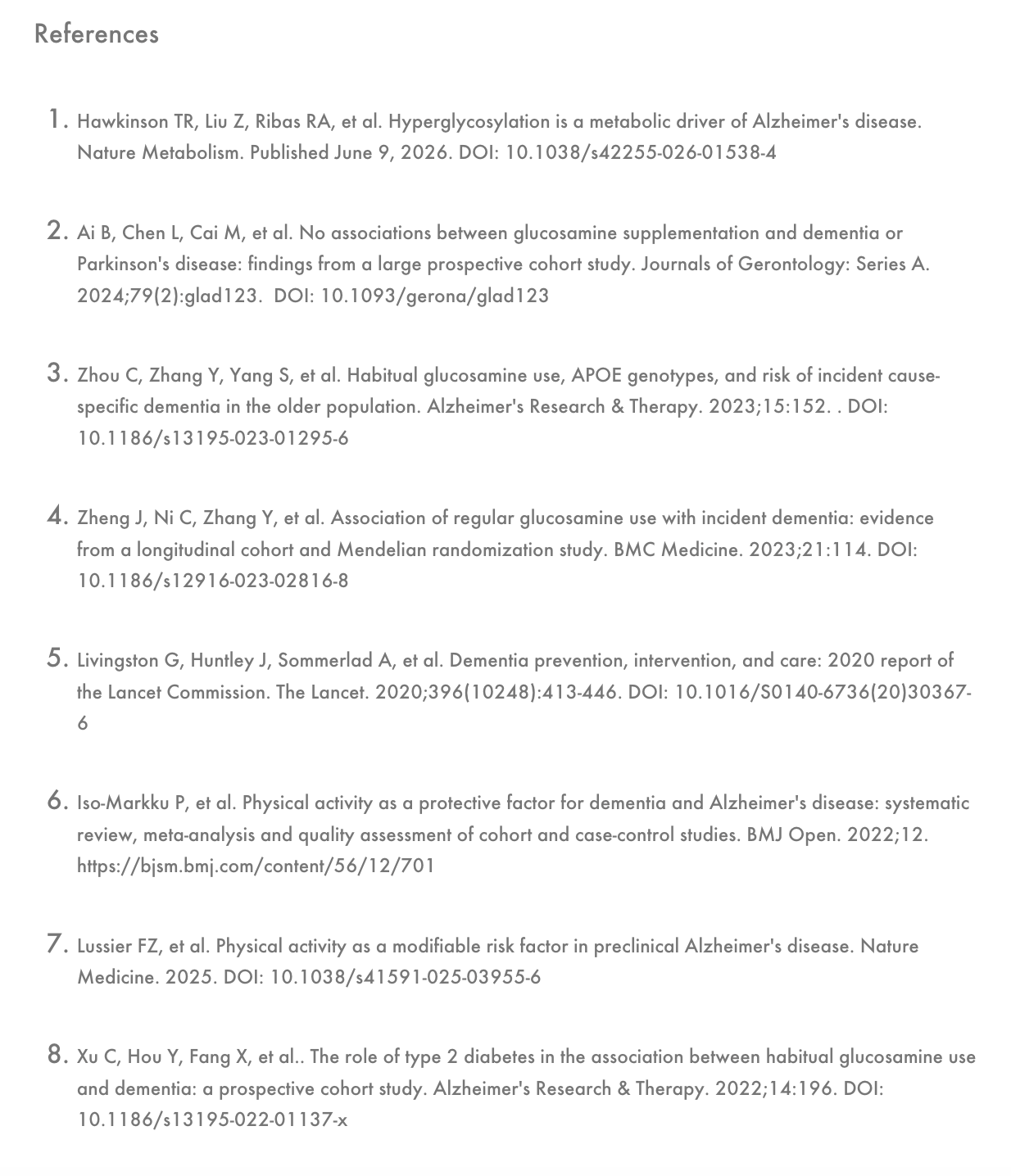
You may have seen recent media coverage stemming from a new study published in Nature Metabolism examining glucosamine use and Alzheimer's disease progression. The research has received considerable attention from consumer and trade media outlets, including a widely shared Newsweek article and subsequent coverage that has, in some cases, characterized the findings in ways that may overstate the study's conclusions.
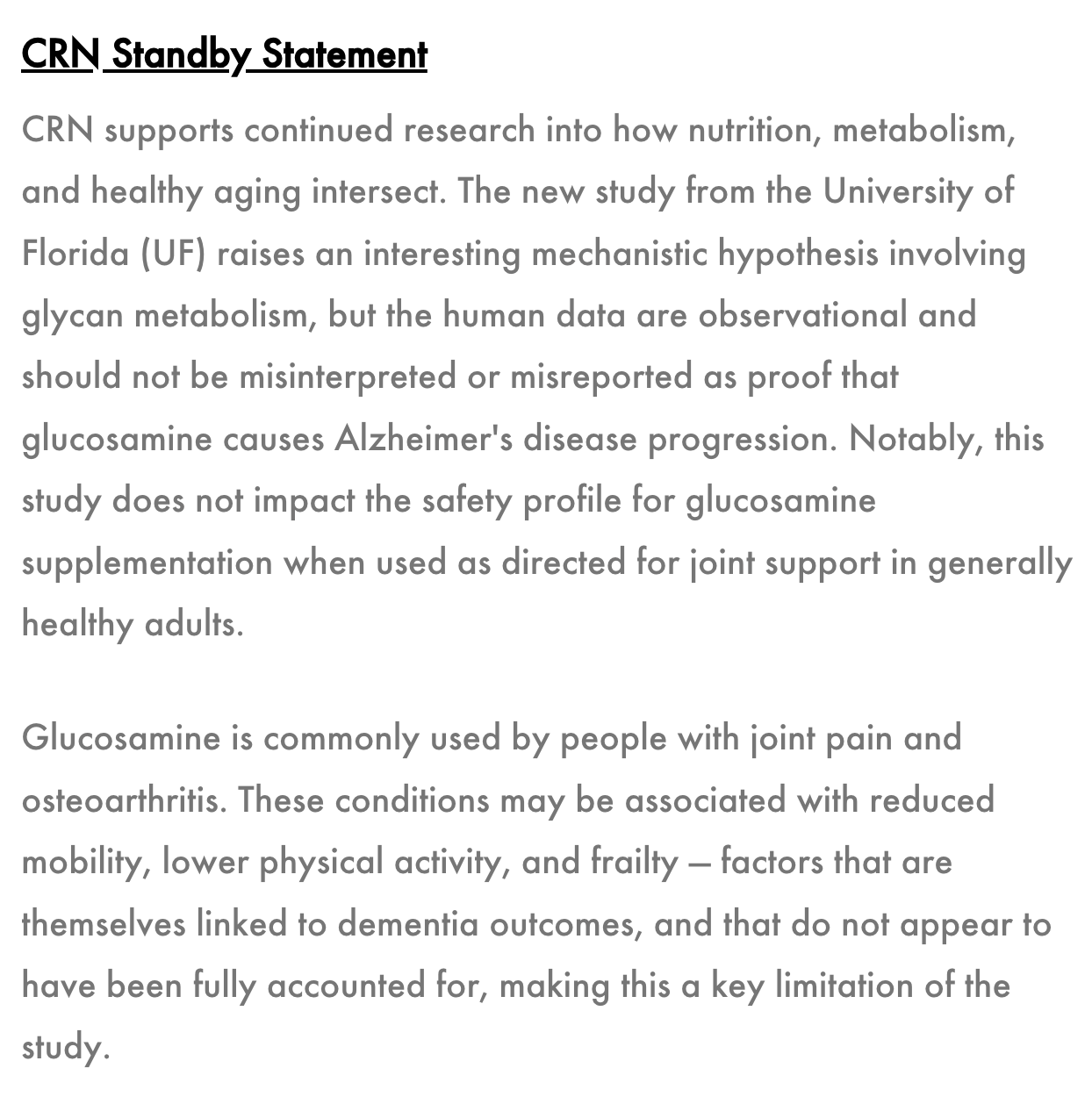
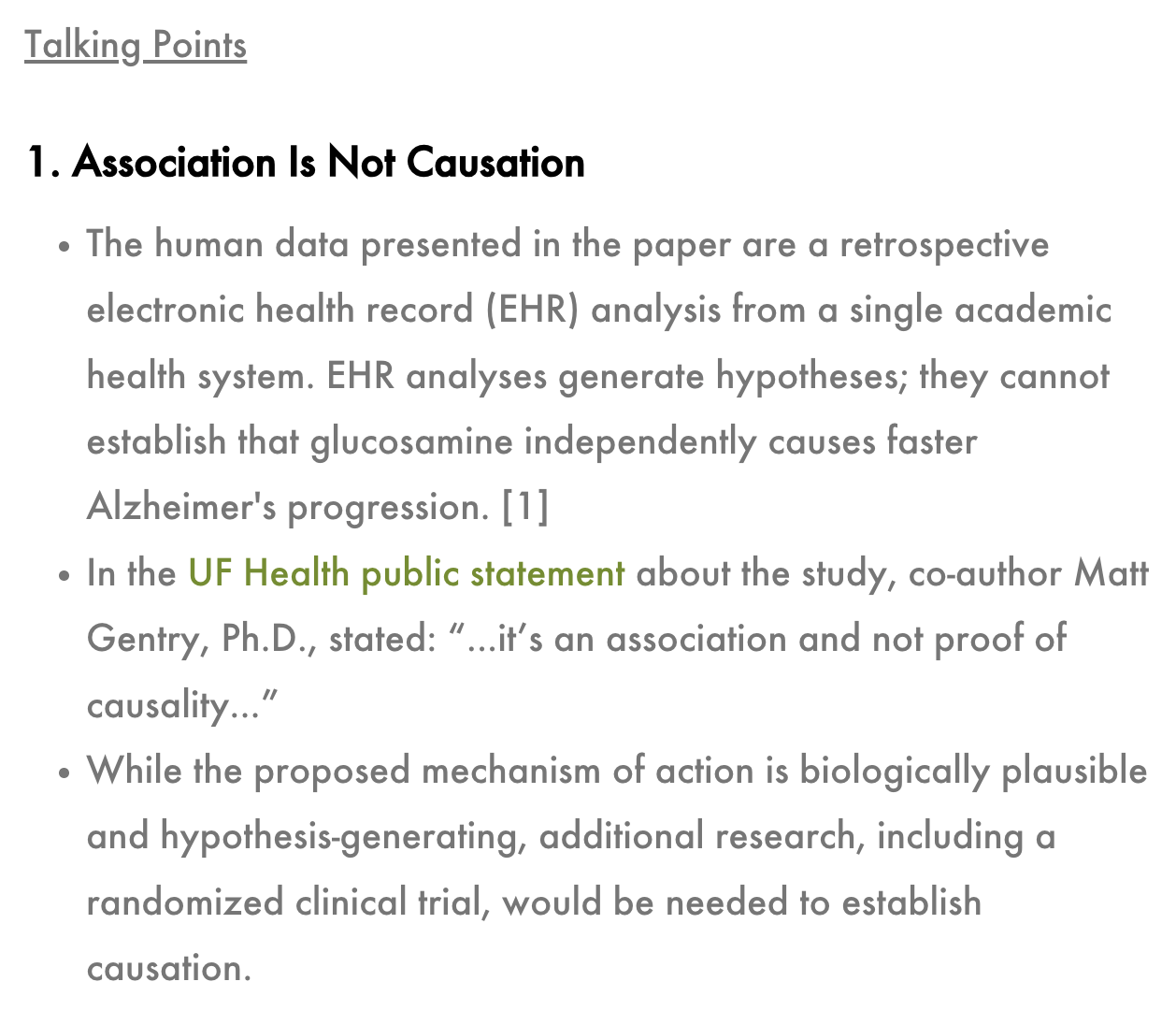
The University of Florida study explored a potential biological mechanism involving glycan metabolism and reported an association between glucosamine use and disease progression among patients already diagnosed with mild cognitive impairment (MCI) or Alzheimer's disease and related dementias. While the findings warrant further scientific investigation, it is important to recognize that the human data were derived from a retrospective analysis of electronic health records and do not establish that glucosamine causes Alzheimer's disease progression.
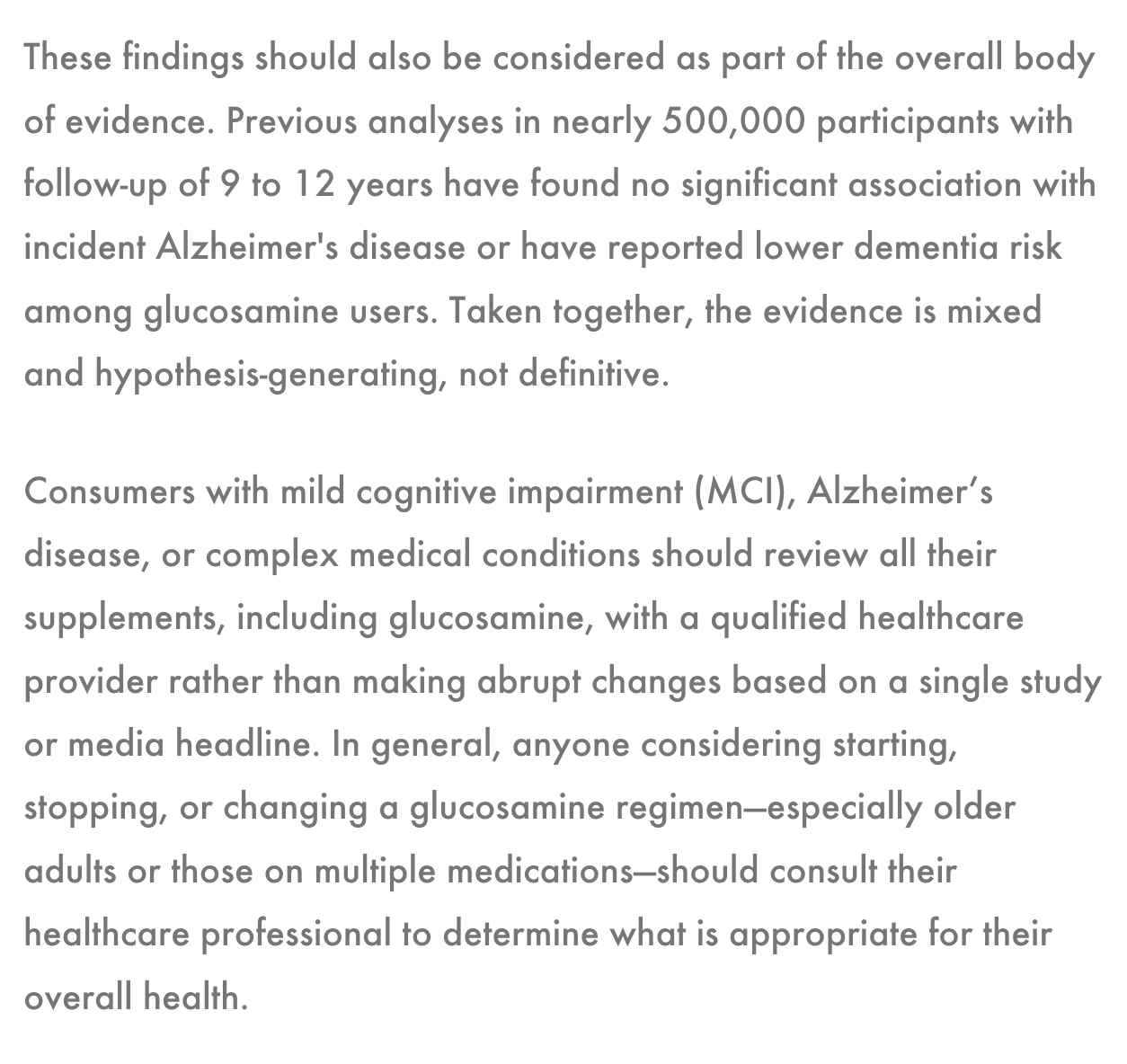
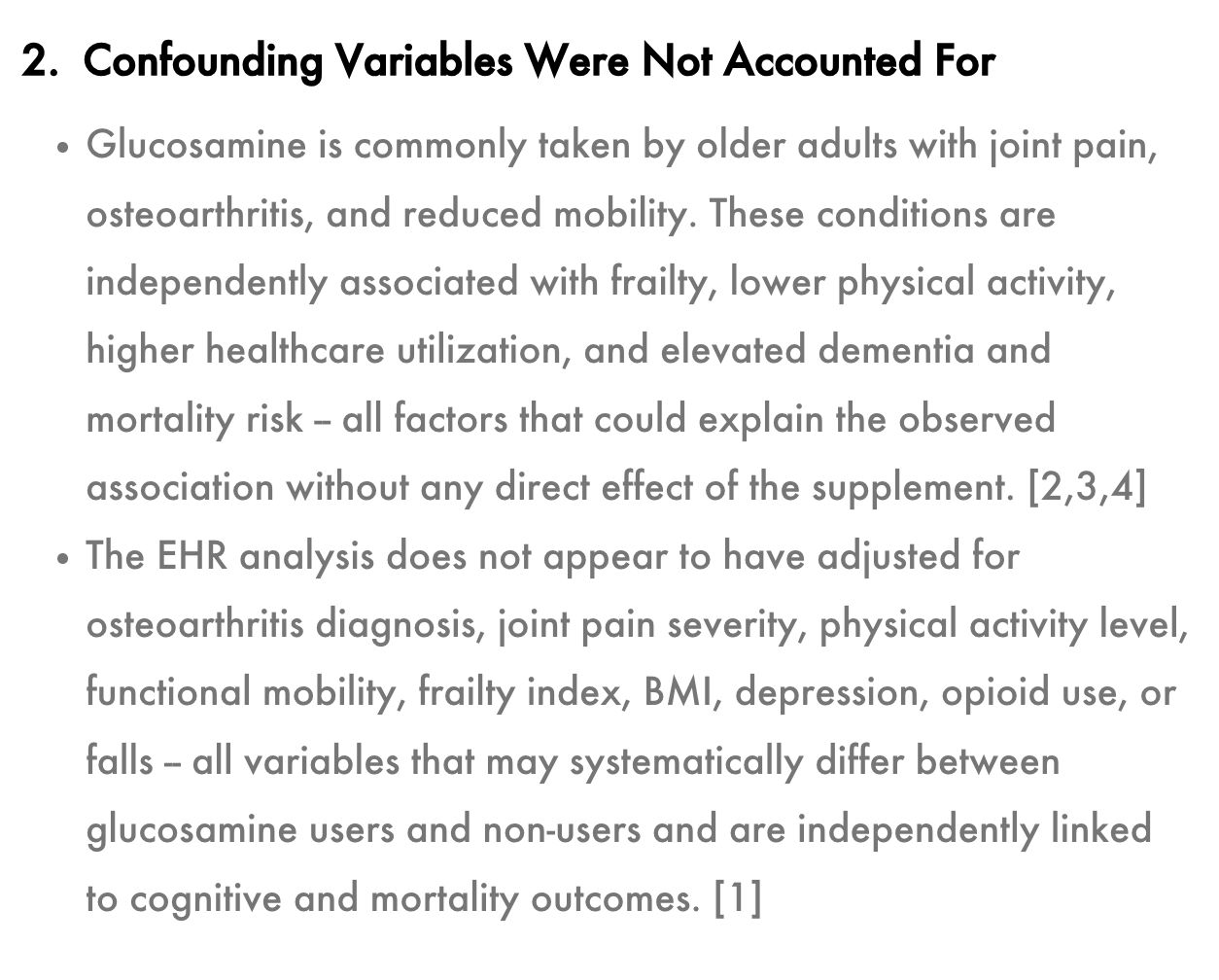
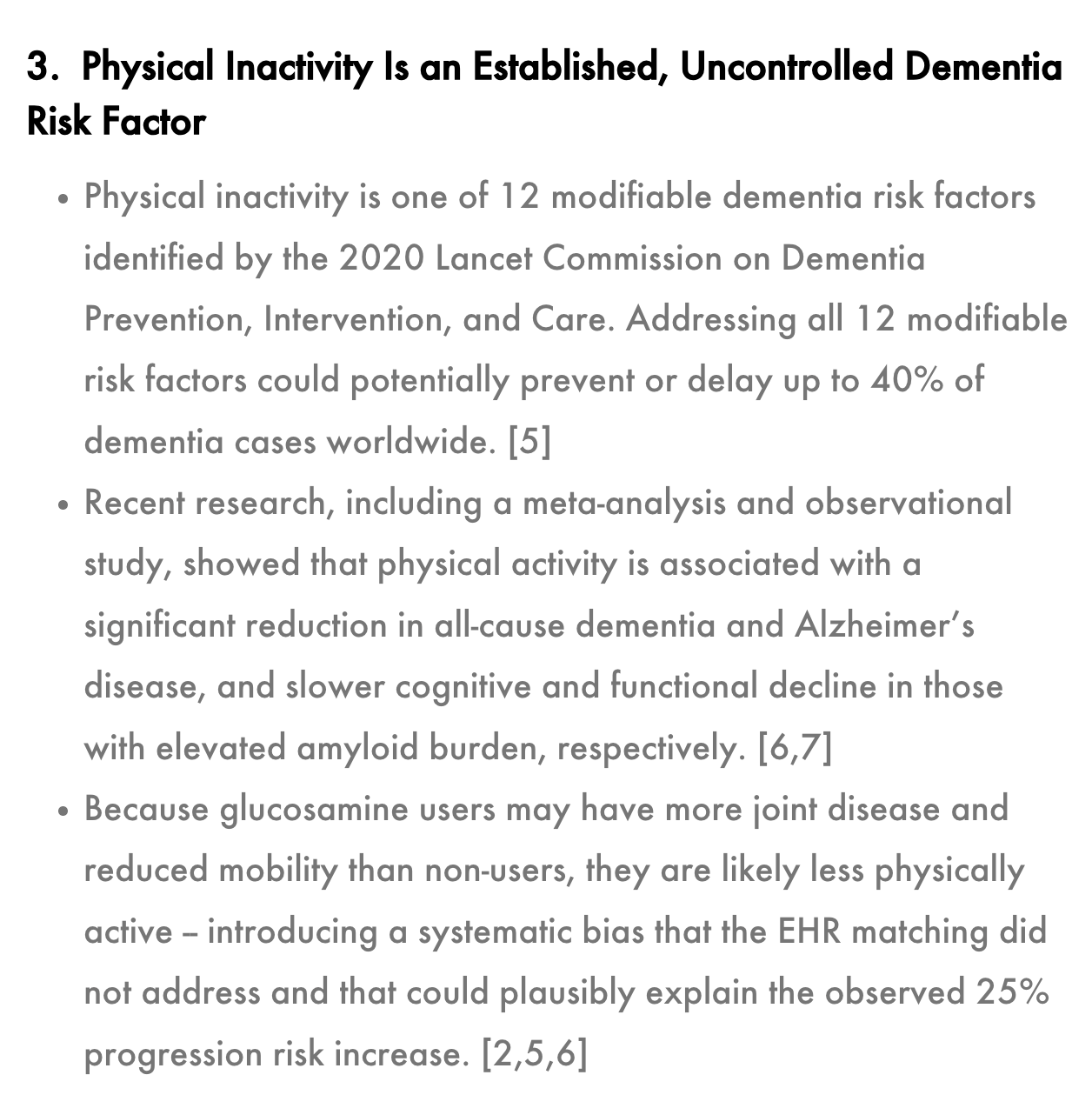
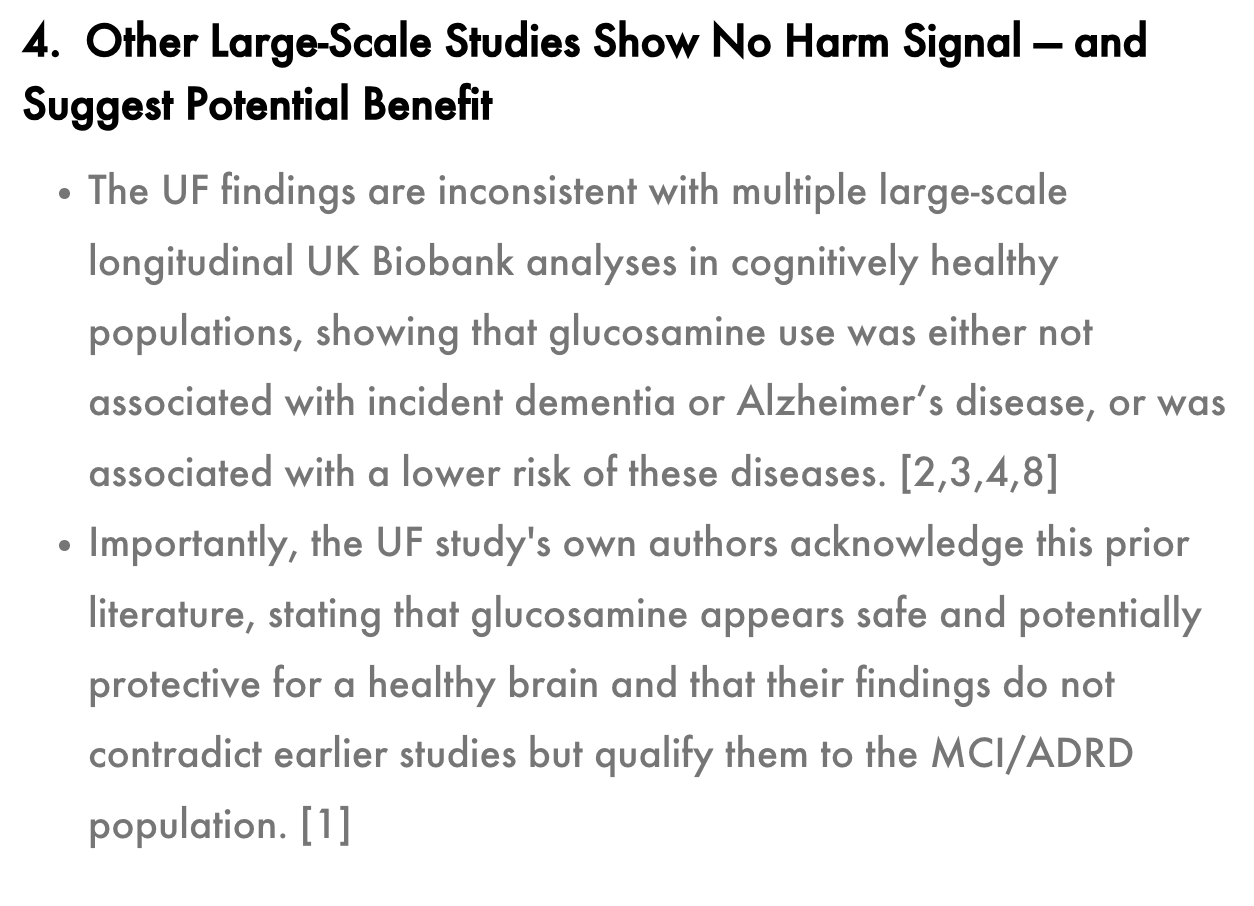
As outlined in the linked resource, several important limitations should be considered when evaluating the study and responding to media inquiries. Importantly, this study does not change the established safety profile of glucosamine when used as directed for joint support in generally healthy adults. At the same time, consumers with MCI, Alzheimer's disease, or other complex medical conditions should discuss all supplement use with their healthcare providers and avoid making abrupt changes based solely on a single study or media headline.
To assist members in responding to questions from customers, healthcare professionals, retailers, and reporters, CRN has prepared the a standby statement and talking points. The resource provides scientific context, outlines key study limitations, and offers recommended language for discussing the findings accurately and responsibly.
We encourage you to share this material with your communications, scientific, regulatory, and customer-facing teams as appropriate.
Get need-to-know updates like these in YOUR inbox every week. Join the CRN member community.
Questions? Contact Ed Wyszumiala (ewyszumiala@crnusa.org)